
Personal & Business Funding
Accessing capital is about more than finding available financing. The right approach begins with understanding your financial position, purpose for funding, borrowing capacity, available options, and the obligations that come with them.
1351 Management helps individuals and business owners evaluate funding readiness, understand potential financing pathways, and prepare to pursue capital with greater clarity and intention.
EXPLORE FUNDING OPTIONSCapital With a Clear Strategy.
Funding decisions should begin long before an application is submitted. Our approach focuses on preparation, evaluation, and alignment—helping you understand not only what funding may be available, but what may make sense for your objectives.
Funding Readiness
Understand your current position before pursuing capital. We help identify financial, credit, documentation, and business factors that may influence funding eligibility and highlight areas that may require attention before applying.
Funding Option Evaluation
Explore financing structures based on purpose, qualifications, cost, repayment obligations, and long-term objectives. The goal is not simply to access capital, but to understand which options may appropriately support the strategy.
Application Preparation
Approach the application process with greater preparation by understanding commonly requested documentation, lender considerations, financial information, underwriting factors, and potential qualification requirements.
Not All Capital Works the Same.
The lowest payment is not always the lowest-cost option, and the largest approval is not necessarily the right amount to borrow. Financing structures can differ substantially in cost, repayment terms, qualification requirements, collateral, guarantees, and intended use. Understanding those differences is an important part of making responsible capital decisions.
Personal Funding
Personal financing may include installment loans, personal lines of credit, credit-based financing, and other consumer lending products.
Eligibility, available amounts, pricing, and repayment terms can vary based on factors such as credit profile, income, debt obligations, lender criteria, and the intended purpose of the funds.
The objective is to understand both access and affordability before taking on a new financial obligation.
Business Funding
Business financing may include term loans, lines of credit, equipment financing, working capital solutions, business credit products, and other forms of commercial capital.
Available options may depend on the company's credit profile, revenue, cash flow, financial history, time in business, industry, documentation, intended use of funds, and other underwriting considerations.
The appropriate capital structure should support the business objective without unnecessarily compromising future cash flow or financial flexibility.
Funding Begins Before the Application.
Lenders and financing providers evaluate more than the amount being requested. Understanding the factors commonly considered during underwriting can help borrowers identify potential gaps and prepare more effectively.
Credit Profile
Personal and/or business credit history may influence eligibility, financing amounts, pricing, terms, and the types of products available.
Income & Revenue
Personal income, business revenue, cash flow, and consistency of earnings may help demonstrate the ability to support repayment obligations.
Debt & Obligations
Existing financial commitments can affect borrowing capacity, cash flow, debt ratios, and lender evaluations.
Business History
Time in business, industry, operating history, financial performance, and stability may influence available commercial financing options.
Documentation
Depending on the financing product, lenders may request identification, bank statements, tax documents, business formation records, financial statements, proof of income, or other supporting information.
Use of Funds
Why the capital is needed matters. Clearly defining the intended use can help identify financing structures that may be better aligned with the objective.
Capital Should Have a Purpose.
Accessing funding is only one part of a capital strategy. Before borrowing, it is important to understand what the funds are expected to accomplish, how the capital will support the objective, and how repayment will affect future cash flow and financial flexibility.
For individuals, capital may support qualified personal objectives where borrowing is appropriate and the repayment obligation can be responsibly incorporated into the broader financial picture.
Access Is Only Part of the Decision.
The amount available is only one consideration. Before accepting financing, borrowers should understand the total financial obligation and how it may affect future flexibility.
COST
Interest rates, fees, origination charges, and other costs can materially affect the true cost of borrowing.
REPAYMENT
Payment frequency, repayment period, amortization, and required payment amounts should be considered against expected cash flow.
STRUCTURE
Secured versus unsecured financing, fixed versus variable rates, personal guarantees, collateral requirements, and other terms can change the risk profile of financing.
TIMING
Capital should be pursued with a defined objective and realistic timeline—not simply because financing is available.
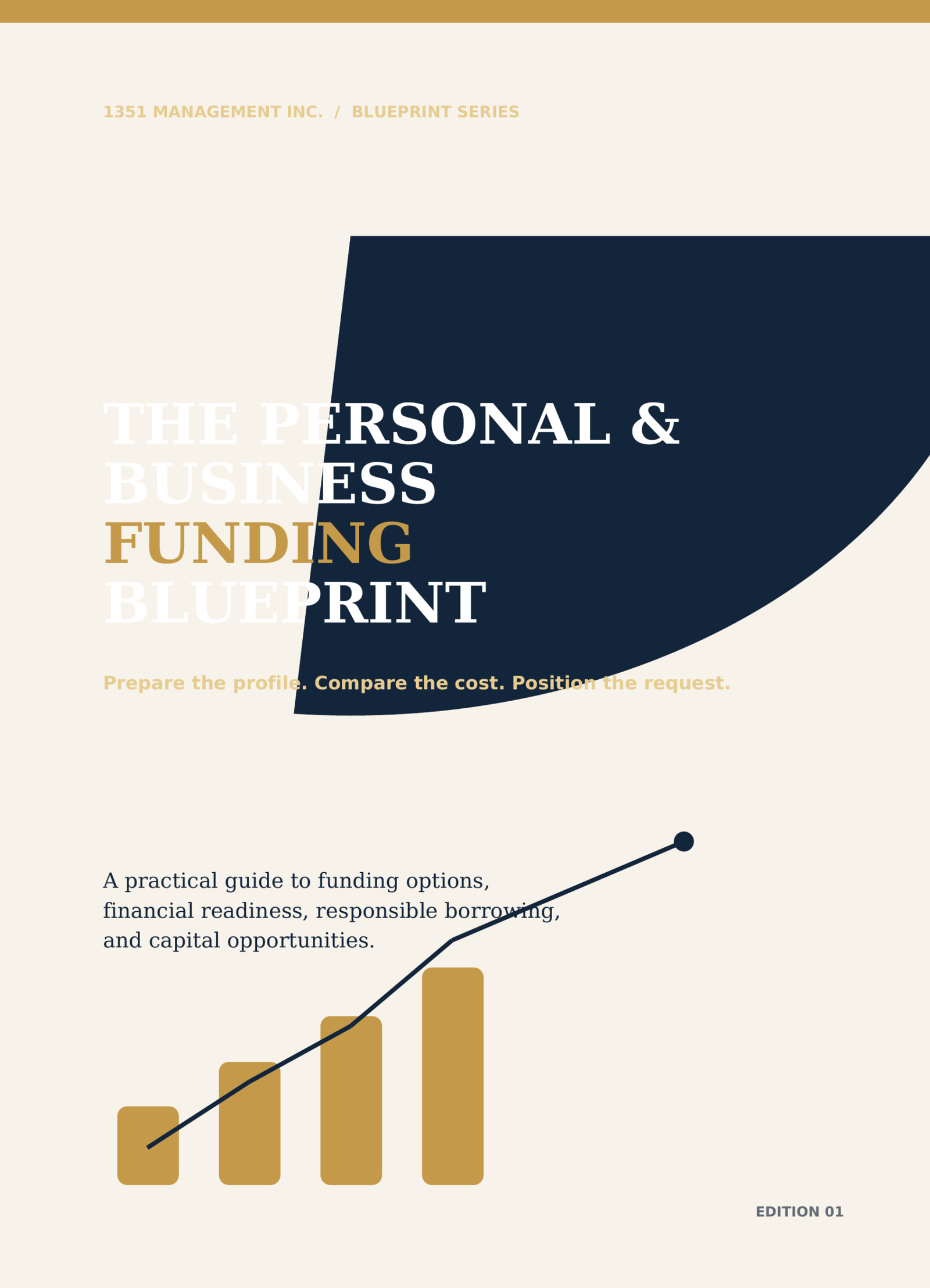
The Personal & Business Funding Blueprint
Capital decisions become easier to evaluate when you understand the fundamentals behind financing.
The Personal & Business Funding Blueprint provides an educational foundation for understanding personal and commercial funding, preparing for applications, evaluating financing structures, and recognizing factors commonly considered by lenders. Topics include funding readiness, personal and business credit considerations, documentation, underwriting factors, financing costs, repayment structures, lines of credit, term financing, working capital, equipment financing, application preparation, and common funding mistakes.
Position Yourself for the Right Capital.
Whether you're preparing for a personal objective, business expansion, an acquisition, real estate, equipment, or working capital, the process begins with understanding where you stand and what options may align with your goals.
SCHEDULE A FUNDING CONSULTATION